
Oral surgery is often the most misunderstood branch of dentistry. Many patients associate it with fear, pain, and long recovery times — but modern oral surgery, when performed by trained specialists using advanced technology, is safe, precise, and far more comfortable than most people expect. At Sushma Dental Hospital, oral surgery is performed by experienced oral and maxillofacial surgeons who combine clinical expertise with modern imaging and sterilization protocols to ensure predictable outcomes and a smooth recovery for every patient.
This guide explains what oral surgery involves, when it is needed, what procedures are commonly performed, and why choosing the right dental hospital matters for long-term oral health.
What Is Oral Surgery?
Oral surgery refers to any surgical procedure performed on the teeth, gums, jawbone, or surrounding soft tissues. Unlike routine dental treatments such as fillings or cleanings, oral surgery addresses more complex issues — impacted teeth, jaw abnormalities, facial trauma, cysts, tumors, and severe infections. It requires specialized training beyond general dentistry, precise surgical planning, and often the use of 3D imaging to map out the procedure before the patient ever sits in the chair.
At Sushma Dental Hospital, every oral surgery case begins with a detailed diagnostic evaluation, including digital X-rays or CT scans where necessary, so the surgical team can plan the safest and least invasive approach for each patient’s unique anatomy.
Common Oral Surgery Procedures
1. Tooth Extractions
Simple and surgical extractions are the most common oral surgery procedures. While simple extractions are performed on visible, erupted teeth, surgical extractions are needed when a tooth is broken at the gum line, severely decayed, or has not fully erupted.
2. Wisdom Tooth Removal
Impacted wisdom teeth are one of the leading reasons patients seek oral surgery. When third molars don’t have enough room to erupt properly, they can grow at odd angles, become trapped beneath the gum, or push against neighboring teeth — causing pain, infection, and crowding. Timely removal prevents these complications from escalating.
3. Dental Implant Placement
Oral surgery plays a central role in implant dentistry. Placing a titanium implant into the jawbone requires surgical precision to ensure proper positioning, stability, and long-term success. This is often paired with bone grafting when the jawbone lacks sufficient density.
4. Bone Grafting and Sinus Lifts
Patients who have lost bone density due to missing teeth, gum disease, or injury may need bone grafting before implants can be placed. Sinus lifts are a specialized grafting procedure used in the upper jaw to create adequate bone height.
5. Corrective Jaw Surgery (Orthognathic Surgery)
For patients with misaligned jaws that affect biting, chewing, speech, or facial symmetry, corrective jaw surgery repositions the upper or lower jaw to restore proper function and appearance.
6. Treatment of Cysts and Tumors
Oral surgeons are trained to identify and surgically remove cysts, benign tumors, and abnormal growths in the jaw and soft tissue, often sending samples for biopsy to rule out serious conditions.
7. Facial Trauma Repair
Accidents involving fractured jaws, broken facial bones, or knocked-out teeth require emergency oral surgical intervention to restore function and appearance.
8. Cleft Lip and Palate Repair
Corrective surgery for congenital conditions like cleft lip and palate is performed to improve function, appearance, and quality of life, typically as part of a staged treatment plan starting in infancy.
Why Oral Surgery May Be Necessary
Patients are often referred for oral surgery when:
- A tooth is impacted or cannot erupt normally
- There is severe tooth decay or infection that cannot be treated with a root canal
- Jawbone or facial structure needs correction
- Teeth are needed for a full-mouth restoration or implant-supported denture
- There is trauma to the mouth, teeth, or jaw
- A cyst, tumor, or unusual growth is detected during a routine check-up
Ignoring these issues can lead to worsening pain, infection spreading to other areas, and more complex (and costlier) treatment later. Early evaluation is always the safer path.
What to Expect During Treatment at Sushma Dental Hospital
Consultation and Diagnosis
The process begins with a thorough oral examination and diagnostic imaging. The surgical team reviews the patient’s medical history, discusses anesthesia options, and explains the procedure in detail.
Anesthesia Options
Depending on the complexity of the case, treatment may be performed under local anesthesia, sedation, or general anesthesia. The goal is always to keep the patient comfortable and anxiety-free throughout the procedure.
The Procedure
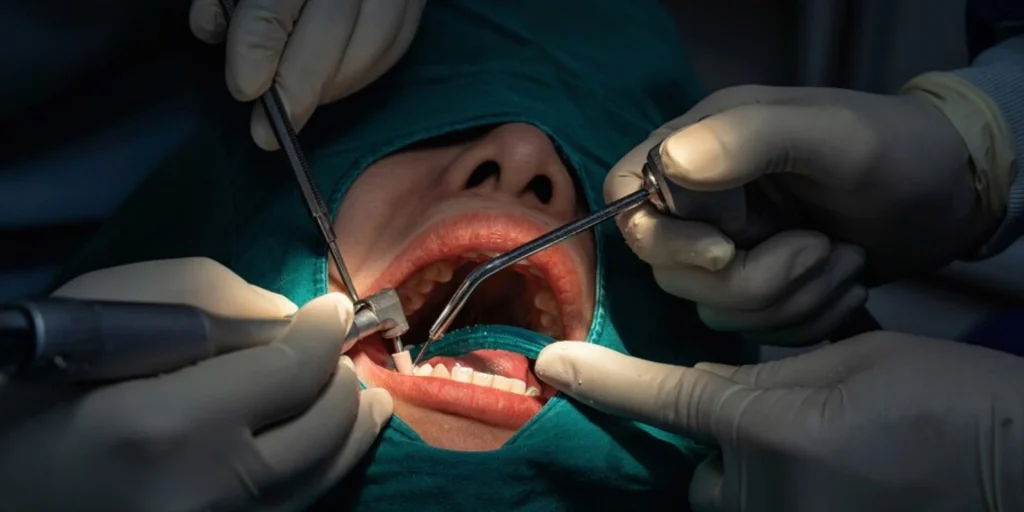
Using modern surgical instruments and strict sterilization standards, the surgical team performs the procedure with minimal tissue disruption, which helps reduce swelling, bleeding, and recovery time.
Recovery and Aftercare
Patients receive clear post-operative instructions covering pain management, diet, oral hygiene, and warning signs to watch for. Follow-up visits ensure healing is progressing as expected.
Tips for a Smooth Recovery After Oral Surgery
- Follow all prescribed medication instructions carefully
- Apply ice packs to reduce swelling in the first 24–48 hours
- Stick to soft, cool foods for the first few days
- Avoid smoking, straws, and vigorous rinsing, which can disrupt healing
- Keep the surgical site clean but avoid aggressive brushing near it
- Attend all follow-up appointments so the surgeon can monitor healing
Why Choose Sushma Dental Hospital for Oral Surgery
Choosing the right facility for oral surgery matters as much as choosing the right procedure. Sushma Dental Hospital offers:
- Experienced oral and maxillofacial surgeons
- Advanced diagnostic imaging for precise surgical planning
- Strict sterilization and safety protocols
- Personalized anesthesia and pain management plans
- Comprehensive aftercare and follow-up support
- A patient-first approach that prioritizes comfort and clear communication
Whether the need is a routine extraction, wisdom tooth removal, implant placement, or a more complex reconstructive procedure, the team is equipped to handle cases with the care and precision they require.
Frequently Asked Questions
Is oral surgery painful? Modern anesthesia and sedation techniques mean most patients feel little to no pain during the procedure. Some soreness during recovery is normal and manageable with prescribed medication.
How long does recovery take? Recovery time varies by procedure — simple extractions may heal within a few days, while more complex surgeries like jaw correction can take several weeks.
Is oral surgery safe? Yes. When performed by a qualified oral surgeon in a properly equipped facility, oral surgery carries a strong safety record and predictable outcomes.
Book a Consultation
If you’re experiencing tooth pain, jaw discomfort, or have been advised to consider oral surgery, don’t wait for the problem to worsen. Visit Sushma Dental Hospital to schedule a consultation with an experienced oral surgery team and get a personalized treatment plan built around your needs.
Leave a Reply